
Leo XIV in Argentina: Caring for Creation Also Means Caring for People
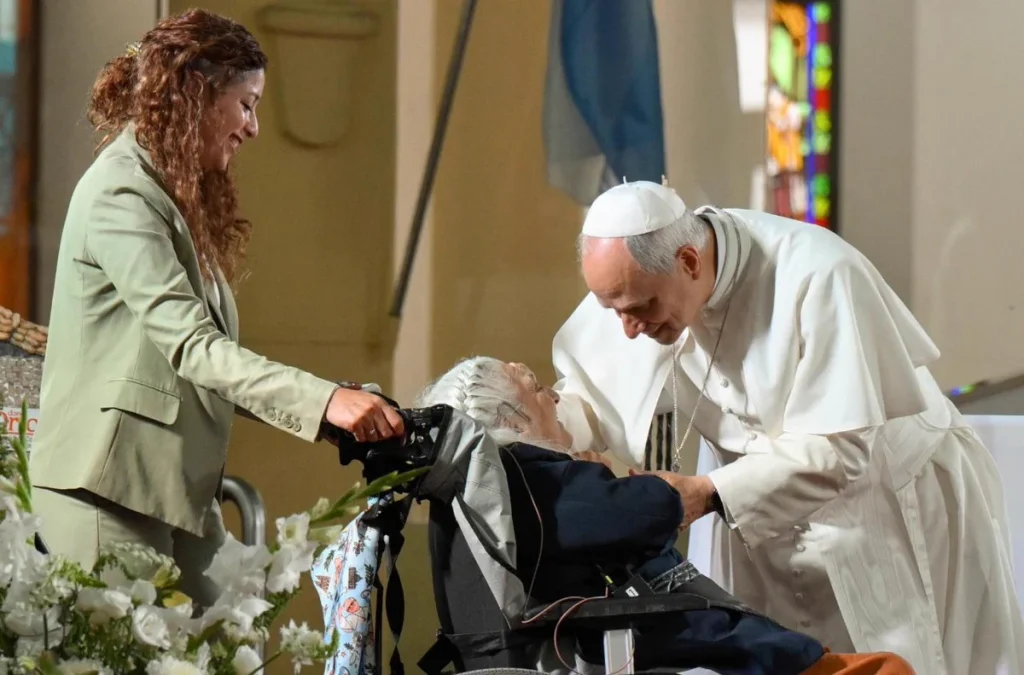
During his visit to Argentina, Pope Leo XIV placed environmental stewardship at the heart of a broader reflection on development, human dignity and the future. Addressing officials, civil society representatives and the diplomatic corps, he highlighted the country’s extraordinary natural wealth and offered a definition that captures his vision: “A truly human ecology knows how to unite care for creation with care for people.”
Pope Leo XIV’s visit to Argentina sent a particularly meaningful message to those working to preserve the environment and promote sustainable development.
On Sunday, November 8, during his meeting with authorities, civil society and the diplomatic corps at the Palacio Libertad in Buenos Aires, the Pontiff devoted part of his address to the responsibility involved in managing the natural heritage inherited by a society.
“A truly human ecology knows how to unite care for creation with care for people,” Leo XIV said, setting out an understanding of the environment that does not separate nature conservation from the concrete conditions in which communities live and work.
The statement carried particular weight because it was made in Argentina. The Pope emphasized that the country has been blessed with extraordinary natural wealth and explicitly cited its **farmland, water reserves, energy sources, minerals and diversity of ecosystems** as resources offering enormous opportunities for development.
But he immediately added a condition: using those resources must contribute to communities’ well-being and preserve the conditions that make life and work possible in their territories.
The idea goes beyond an environmental debate understood exclusively as preservation. In Leo XIV’s vision, nature, production, communities and development are all part of the same responsibility.
It also continues the concept of **integral ecology** championed by Pope Francis, for whom the environmental and social crises could not be treated as separate phenomena. Leo XIV took up that legacy on his first visit to Argentina and linked it directly to the opportunities and responsibilities arising from the country’s vast natural resources.
His message is especially timely as Argentina debates the development of mining, hydrocarbons, food production, renewable energy and the infrastructure needed to turn those resources into economic growth.
From this perspective, the question is not simply how much to produce or how much to preserve, but **how to use natural resources so that development can be sustained over time, improve people’s lives and conserve the ecosystems on which that very development depends**.
The Pope also extended this perspective to South America. He recalled that major rivers cross borders, ecosystems connect different countries, and energy, food, knowledge and human mobility create ties that no state can manage in complete isolation.
Environmental protection thus also becomes a matter of regional cooperation.
For Argentina, home to some of the region’s largest reserves of fresh water, biodiversity, productive soils, energy resources and strategic minerals, the message has a concrete meaning: natural abundance is an opportunity, but also a responsibility toward those living in these territories today and toward future generations.
In Buenos Aires, Leo XIV summed up that responsibility in a simple yet profound sentence:
**“A truly human ecology knows how to unite care for creation with care for people.”**
A definition that places the environment not at the margins of development, but at its very center.