

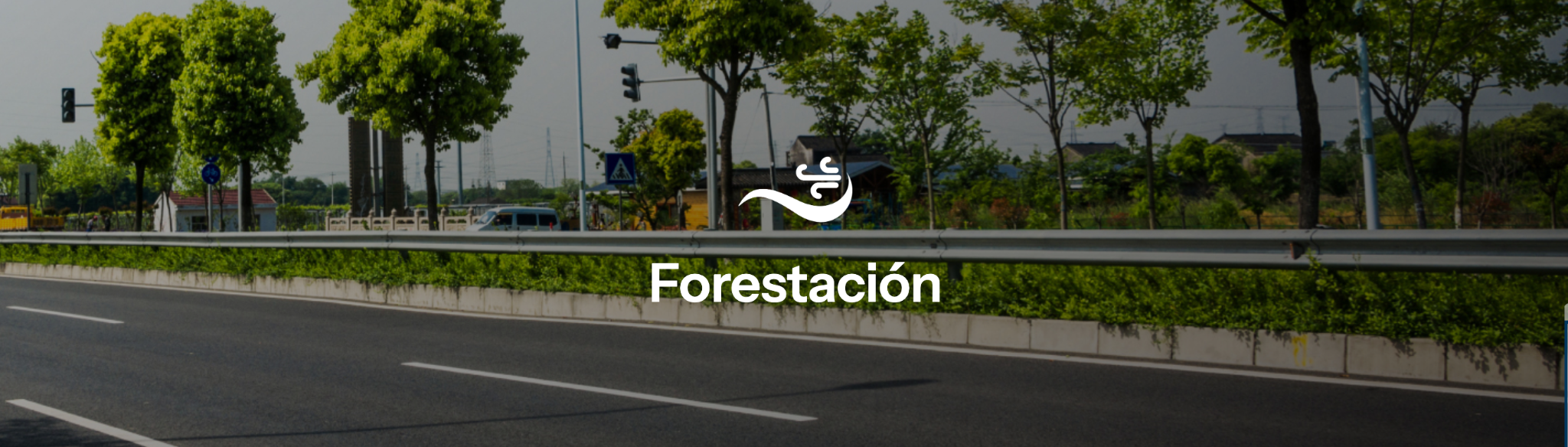
Native plantings to mitigate road impacts
The project aims to establish native-species plantings in road infrastructure to mitigate the negative effects of noise and visual pollution and the greenhouse-gas emissions produced by vehicles traveling through these corridors.
Green barriers, landscape and biodiversity
Plantings along road infrastructure such as highways help protect soil and pavement, integrate roads into the landscape, reforest areas affected by construction, create biological corridors, mark roundabouts and obstacles, and provide visual, acoustic and wind barriers.
Acoustic barrier
Vegetation helps reduce noise pollution caused by traffic.
Visual barrier
It integrates road infrastructure into the landscape and reduces negative visual impacts.
Emissions
It helps mitigate gases and particles associated with vehicle traffic.
Soil and pavement
Tree cover helps protect the soil and supports the maintenance of infrastructure.
Biological corridor
Native species can connect habitats and strengthen local biodiversity.
Variables, economic benefits and environmental uses
Data
Economic uses
Environmental uses
The road as an environmental corridor
Roadside afforestation can transform infrastructure strips into spaces for environmental mitigation, landscape restoration and biological connectivity, linking mobility, the environment and territorial development.