
ASE and the Provincial University of Ezeiza connect applied research and territory
Fundación Argentina ASE signed a framework agreement with the Provincial University of Ezeiza to promote applied research, territorial coordination, environmental monitoring and sustainability.


Fundación Argentina ASE signed a framework cooperation agreement with the Provincial University of Ezeiza to carry out joint projects in applied research and territorial coordination. The agreement is focused on environmental monitoring, sustainability and the development of local capacities related to environmental care.
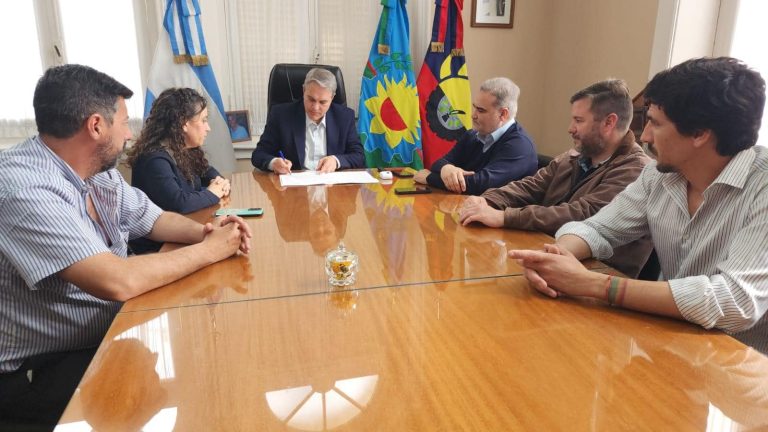
The agreement was signed by the University's rector, Daniel Galli, and Fundación Argentina ASE's executive director, María Cecilia Pon. Also participating were Macarena Forneris, the University's vice rector; Leonardo Altieri, coordinator of the Tourism degree program; and Facundo Villar, director of the Tourism Research Center.
The agreement lays the foundation for concrete actions in the area of influence of the Provincial University of Ezeiza. This local scale is key to transforming knowledge into territorial intervention, with projects capable of producing information, strengthening community participation and improving participatory environmental management.
Applied research makes it possible to connect academic knowledge, territorial needs and decision-making. In environmental matters, this relationship is especially important: monitoring, measuring, diagnosing and evaluating are not isolated tasks, but conditions for designing policies and projects that respond to real problems.
For Fundación Argentina ASE, cooperation with public and provincial universities is part of a strategic agenda. The production of environmental knowledge requires institutions capable of working with communities, local governments, technical teams and productive sectors. The goal is not to generate information closed in on itself, but useful tools for sustainable human development.
The participation of representatives linked to tourism also opens a relevant line of work. Tourism, when planned with sustainability criteria, can be integrated with the valuation of natural heritage, environmental education, local development and ecosystem protection. Territorial coordination makes it possible to think about these dimensions together.
The agreement reinforces both institutions' commitment to sustainability, territorial engagement and the production of applied knowledge. In a context of growing environmental challenges, cooperation among foundations, universities and communities helps build responses that are more precise, participatory and sustained over time.
With this agreement, ASE reaffirms a way of working that connects environment, education, technology, research and territory. The environmental agenda needs data and capacities, but also institutions capable of turning that knowledge into concrete projects to improve quality of life and protect ecosystems.