
Ciervo de los Pantanos National Park: Technical Visit Advances Installation of Fire Prevention System
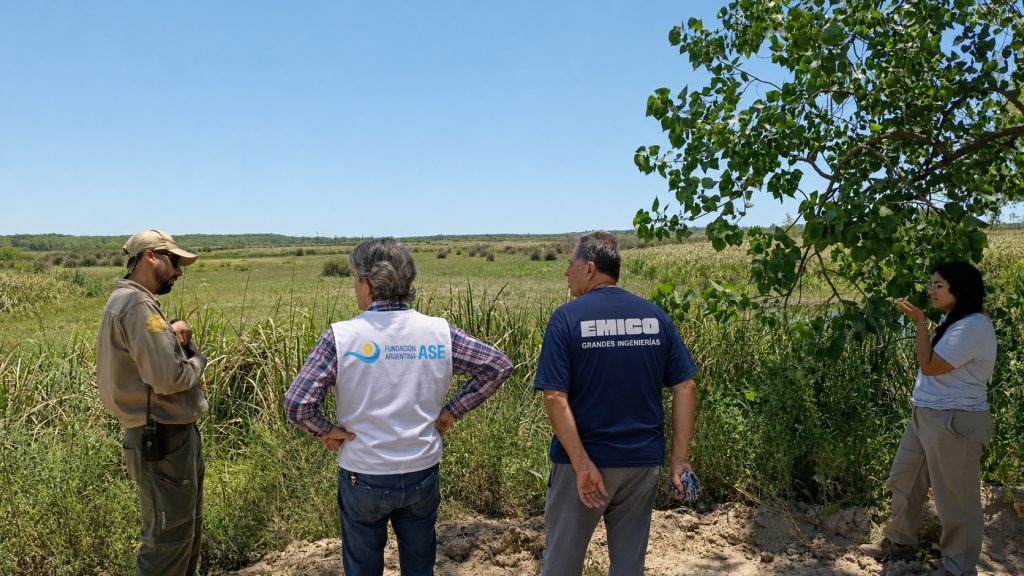
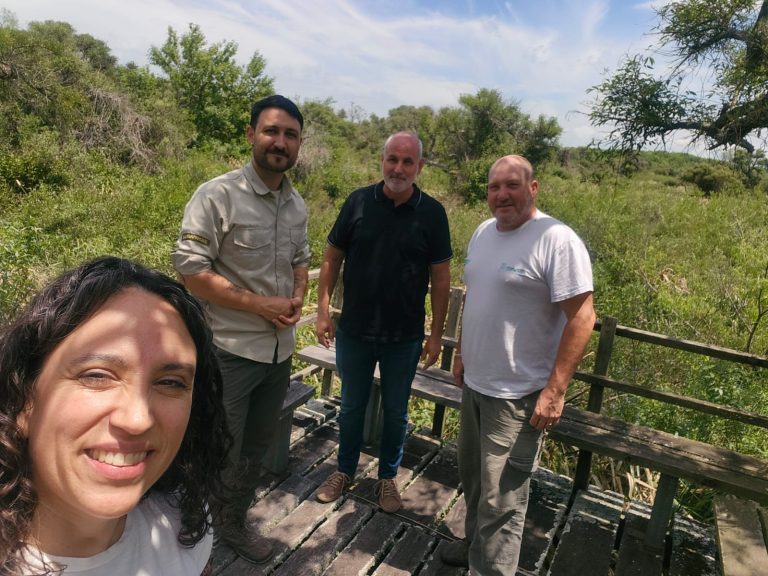
Fundación Argentina ASE conducted a technical visit today to Ciervo de los Pantanos National Park alongside park rangers and EMICO’s technical team. The group inspected the sites proposed for infrared detection towers and weather sensors that will form part of the fire prevention system. The initiative will combine heat detection to alert against imminent threats with analysis of environmental parameters to anticipate risk scenarios.
On November 25, 2026, Fundación Argentina ASE conducted a technical visit to Ciervo de los Pantanos National Park, in Campana, Buenos Aires Province, as part of preparations to install its forest fire prevention and detection system. The Foundation’s team visited the proposed monitoring infrastructure sites together with park rangers and EMICO technicians.
The day brought together the park staff’s knowledge of the territory, the Foundation’s work and EMICO’s technical participation. The site visit focused on identifying where the towers supporting infrared cameras would be installed, along with the devices that will record weather and environmental conditions.
Understanding the terrain before installation
Site selection is part of how the system will operate. Camera placement and orientation will determine which areas can be observed, while sensor positioning must provide representative measurements of local conditions. Vegetation, terrain characteristics and access for installation and maintenance must all be considered in planning.
The joint visit connected technical preparation with the knowledge of those who work daily in the protected area. Rangers’ experience is essential to interpreting each sector’s particular features and guiding the deployment of monitoring tools. EMICO’s technical team helped identify installation sites and prepare for the required infrastructure.
This preliminary work aims to adapt the system to park conditions according to operational usefulness, maintenance needs and environmental care. Installation must meet monitoring needs while respecting a landscape of wetlands, grasslands, forests and flood-prone areas.
Two complementary capabilities: imminent alerts and early warnings
The system will have two distinct but complementary functions: identifying heat signals that demand immediate attention and anticipating environmental conditions that create risk scenarios.
The infrared detection towers will carry cameras designed to identify heat sources and thermal anomalies that may be associated with the outbreak of a fire. This component will provide imminent alerts, supplying information to verify a possible threat and support a timely response. Its purpose is to shorten the interval between detecting a significant thermal signal and having it assessed by those responsible for the area.
The early warning component will rely on a network of meteorological and environmental sensors. The project design includes measurements of air temperature and humidity, wind speed and direction, atmospheric pressure and rainfall. It also plans to measure carbon dioxide concentrations as well as soil moisture and temperature to broaden the available environmental information.
The sensors will produce the records used in the analysis: joint processing of these parameters and how they change over time will make it possible to model risk scenarios and generate preventive alerts. High temperatures, low humidity, scarce rainfall and wind, for example, can dry vegetation and increase the potential for fire to spread. Local data will make it possible to track these conditions and guide surveillance.
Thermal observation will thus signal situations requiring immediate verification, while environmental modelling will help identify periods and conditions calling for stronger preventive measures. Both functions will support decisions made by the park’s teams.
Locally generated information to strengthen prevention
The project plans to bring measurements together in a recording and processing system, combining data from installed devices with information from its own weather stations and open sources. This arrangement will allow users to review environmental conditions and build a historical database of local information.
Accumulated records will help compare periods, identify seasonal variations and deepen knowledge of monitored sectors. The network’s value will lie both in timely warnings and in the information it gathers for the protected area’s day-to-day management.
Implementation will also require linking alert reception with verification, communication procedures and records of actions taken. The system’s operational usefulness will depend on the relationship between equipment, information and people trained to interpret each signal in context.
Institutional cooperation to protect the park
The project builds on the cooperation agreement between Fundación Argentina ASE and the National Parks Administration, announced in October 2024, which provided for a pilot trial in Ciervo de los Pantanos National Park.
The agreement provided for equipment to be supplied on loan, with ASE responsible for installation and maintenance, while National Parks contributed territorial expertise and identified strategic monitoring points. Today’s technical visit continued that work and brought EMICO’s team into the assessment of possible sites.
A key area for wetland conservation
Established in 2018 on the basis of the Otamendi Nature Reserve, Ciervo de los Pantanos National Park protects habitats from the Paraná Delta and Islands, Pampas and Espinal ecoregions. Its wetlands, lagoons, marshy grasslands, open grasslands and tala woodlands provide a biodiversity refuge in a densely populated region.
The area is recognized as a Ramsar Site for the international importance of its wetlands and as an Important Bird Area. Its floodplains shelter threatened species, including the marsh deer, straight-billed reedhaunter and bay-capped wren-spinetail. Protecting these environments means preserving habitats and ecological processes tied to water and the dynamics of the Delta.
The technical visit marked another step toward installation. For Fundación Argentina ASE, cooperation with park rangers and EMICO’s technical team is a concrete way to bring technology and local knowledge to conservation: anticipating risk conditions, identifying heat signals and providing timely information to those responsible for protecting the park.